What Is Cybersecurity? Types, Threats & Why It Matters
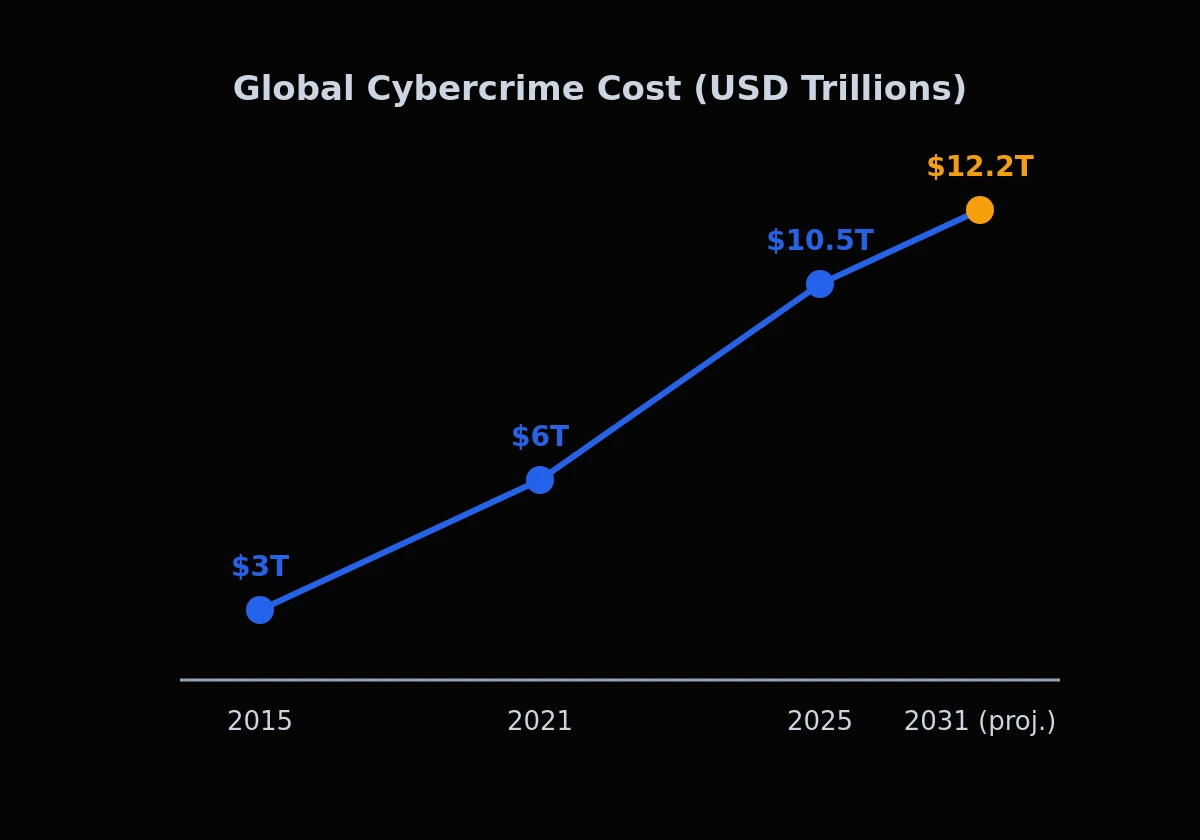
Cybercrime will cost $10.5 trillion in 2025. Learn what cybersecurity is, how it differs from IT security, the 6 main types, and how to start a career.
By Prathamesh Dabir
If cybercrime were a country, it'd have the third-largest economy on Earth — behind only the US and China. That's not a metaphor. In 2025, cybercrime is projected to cost the world $10.5 trillion, according to Cybersecurity Ventures' Official Cybercrime Report, and the same research expects that figure to reach $12.2 trillion by 2031.
So when people ask "what is cybersecurity, and why does everyone keep talking about it?" — that number is the short answer. This guide is the long one. We'll cover what cybersecurity actually means, how it differs from IT security (they're not the same thing), the six main types, the threats that cause most of the damage, and whether it's worth building a career in.
Key Takeaways
- Cybersecurity is the practice of protecting systems, networks, and data from digital attacks — a subset of IT focused on defense, not operations.
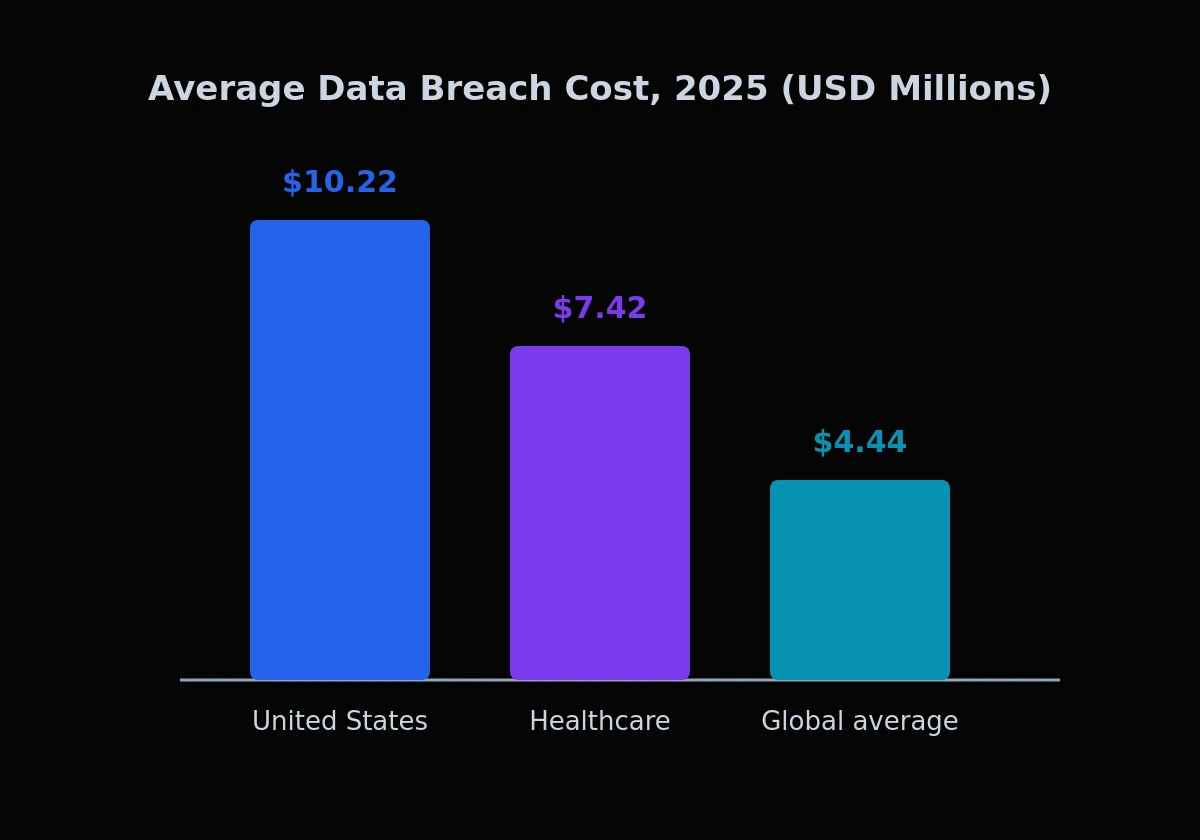
- The average data breach cost $4.44 million globally in 2025, and $10.22 million in the US (IBM, 2025).
- Phishing and ransomware drive most incidents; ransomware appeared in 44% of breaches in 2025.
- The field has a 4.8 million worker shortage — which is why salaries keep climbing.
Related: how card fraud actually works, and how to stop it
What Is Cybersecurity?
Cybersecurity is the practice of protecting computers, servers, networks, applications, and data from unauthorized access, theft, and damage. The stakes are measurable: in 2025, the average cost of a single data breach was $4.44 million globally, per IBM's Cost of a Data Breach Report 2025.
Strip away the jargon and cybersecurity answers three questions:
- Confidentiality — can only the right people see this data?
- Integrity — can anyone tamper with it without being noticed?
- Availability — will the system work when we need it?
Security teams call this the CIA triad, and nearly every tool, policy, and job in the industry exists to defend one of those three properties. A firewall protects availability and confidentiality. Encryption protects confidentiality and integrity. Backups protect availability. Different tools, same three goals.
One thing cybersecurity is not: a product you buy once. It's a continuous practice — because the people attacking you treat it as a full-time job too.
What's the Difference Between IT Security and Cybersecurity?
IT is the whole house; cybersecurity is the locks, alarms, and cameras. Information technology covers everything that keeps systems running — hardware, networks, software, support — while cybersecurity is the specialized discipline within it focused purely on defending those systems from attack. The two fields even hire differently, and in 2025 the gap between them kept widening as security specialized.
Here's the practical breakdown:
| Information Technology (IT) | Cybersecurity | |
|---|---|---|
| Core job | Build and run systems | Defend systems from attack |
| Success looks like | Uptime, performance, support tickets closed | No breaches, threats caught early |
| Typical roles | Sysadmin, network engineer, IT support | Security analyst, pen tester, SOC engineer |
| Mindset | "How do we make this work?" | "How could someone break this?" |
| Scope | All technology operations | Subset of IT focused on protection |
Why does the distinction matter? Because a lot of small businesses assume their IT person "handles security." Usually they handle some of it — patching, backups, maybe antivirus. But defending against modern attacks is a separate skill set, the same way knowing how to build a house doesn't make you a locksmith.
Related: our cybersecurity consulting and assessment services
Why Is Cybersecurity Important in 2026?
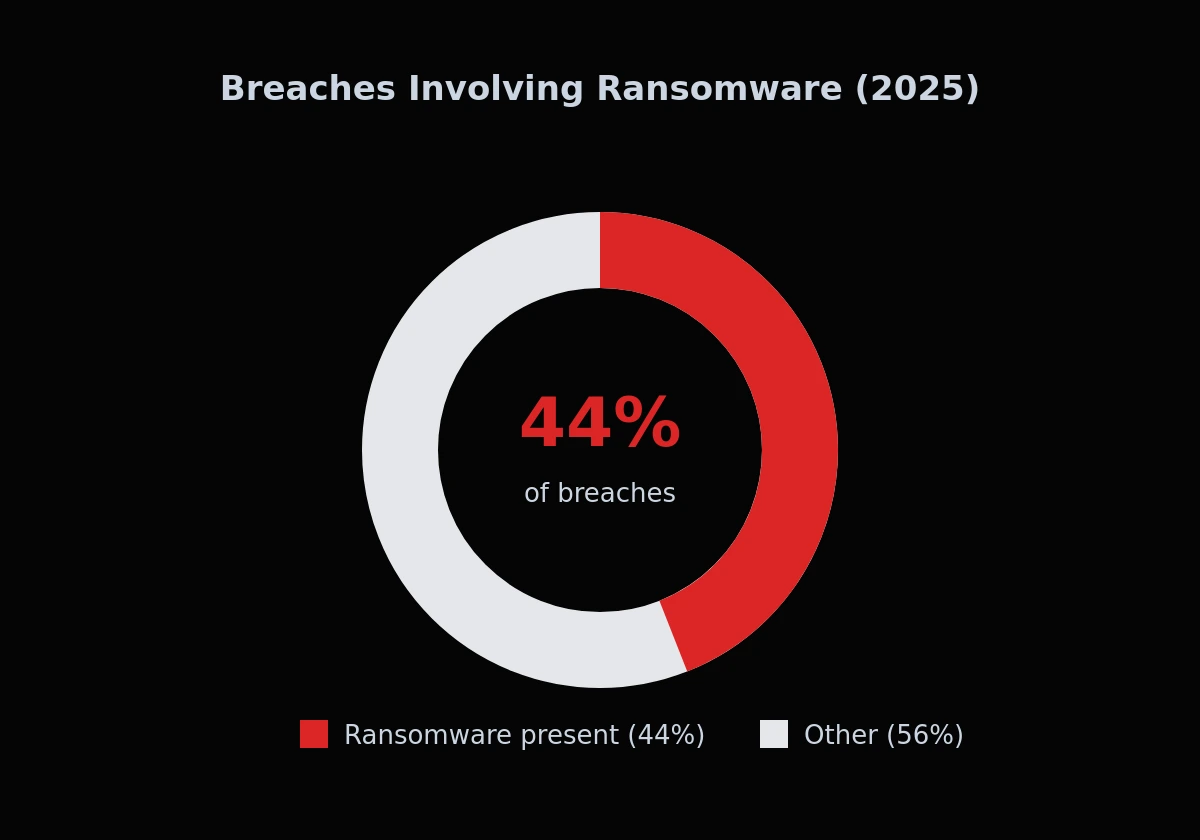
Because attacks are no longer rare events — they're background noise with a body count. In 2025, ransomware alone appeared in 44% of confirmed breaches, a 37% jump year-over-year, according to Verizon's 2025 Data Breach Investigations Report. And the cost curve keeps bending upward.
Three numbers tell the story better than any argument:
- $4.44 million — global average cost of a data breach in 2025, per IBM's Cost of a Data Breach Report. In the US it's $10.22 million.
- 241 days — average time to identify and contain a breach in 2025 (IBM). That's eight months of an intruder inside the network. And that's the best figure in nine years.
- 16% — share of breaches in 2025 where attackers used AI, mostly for phishing and deepfakes (IBM).
Notice what's missing from that list? Company size. Attackers automate, and automation doesn't care if you're a Fortune 500 or a 12-person shop. Small businesses just make the news less often.
Related: cybersecurity for small businesses in India
What Are the Main Types of Cybersecurity?
Cybersecurity splits into six major domains, and mature organizations need coverage across all of them — a lesson reinforced in 2025 when IBM found that organizations using AI and automation across their security stack saved $1.9 million per breach compared to those that didn't.

1. Network Security
Protects the roads data travels on — firewalls, intrusion detection, VPNs, network segmentation. If an attacker gets in, segmentation decides whether they've breached one room or the whole building.
For a deeper breakdown, read what network security is, its four types, and where to start.
2. Cloud Security
Securing data and workloads in AWS, Azure, and Google Cloud. The catch most teams miss: cloud providers secure the infrastructure, but you secure your configurations. Most cloud breaches trace back to customer misconfiguration, not provider failure.
3. Endpoint Security
Laptops, phones, servers — every device is a door. Modern endpoint tools (EDR) watch for malicious behavior instead of just matching known virus signatures.
For a practical look at how endpoint protection evolved from antivirus to EDR, read what antivirus software does and which type fits.
4. Application Security
Building software that resists attack: secure coding, dependency scanning, penetration testing. Cheaper to fix a flaw in code review than in a breach post-mortem. By a factor of thousands.
5. Identity and Access Management (IAM)
Who are you, and what are you allowed to touch? Multi-factor authentication, least-privilege access, and zero-trust models live here. Stolen credentials remain one of the most common breach entry points.
6. Operational and Data Security
The policies and processes around everything else — data classification, backups, incident response plans, employee training. Least glamorous, most neglected, frequently decisive.
Here's the pattern we see across these six: companies don't usually fail because they lack tools in one domain. They fail in the seams between domains — the cloud storage bucket IT thought security configured, the ex-employee account nobody deprovisioned. Attackers don't attack categories. They attack gaps.
What Are the Most Common Cyber Threats?
Phishing starts the majority of attacks, and ransomware finishes the worst of them. In 2025, ransomware was present in 44% of breaches per Verizon's DBIR — and an estimated 3.4 billion spam emails went out every single day, per phishing research compiled by TechMagic.
The threats worth knowing by name:
- Phishing and social engineering. Fake emails, texts, and calls that trick people into handing over credentials or money. Still the #1 entry point — because it targets humans, not software.
- Ransomware. Malware that encrypts your data and demands payment. Modern gangs also steal the data first and threaten to leak it ("double extortion").
- Credential attacks. Reused passwords from old breaches, tried everywhere. This is why password reuse is the sin security people won't shut up about.
- Malware and spyware. The classic category — now often rented as a service for as little as $15 a month on underground markets.
- AI-assisted attacks. The newest layer. IBM found attackers used AI in 16% of 2025 breaches, mostly to write convincing phishing at scale and generate deepfake audio.
Does that list feel overwhelming? Here's the reassuring part: the defenses overlap heavily. MFA, patching, backups, and trained employees blunt most of these at once. Attackers are efficient — they go where those four things are missing.
Related: phishing awareness and security training
How Do Businesses Actually Build Cybersecurity?
Not by buying more tools — by closing detection gaps faster. The evidence: in 2025, organizations that used security AI and automation extensively saved $1.9 million per breach and contained incidents dramatically faster, per IBM's Cost of a Data Breach Report. Speed, not spend, separated the cheap breaches from the catastrophic ones.
A sane starting sequence for any organization:
- Know what you have. You can't protect assets you haven't inventoried. Shadow IT — and now shadow AI, which added $670,000 to average breach costs in 2025 per IBM — thrives on this blind spot.
- Turn on MFA everywhere. The single cheapest, highest-impact control in existence.
- Patch on a schedule, not a whim. Most exploited vulnerabilities had fixes available for months.
- Back up, and test the restore. A backup you've never restored is a hope, not a plan.
- Train people with realistic phishing drills. Your staff is either your weakest link or your best sensor network. Training decides which.
- Adopt a framework. NIST CSF or ISO 27001 give you a map instead of a vibes-based security program.
- Plan the bad day. An incident response plan written during a crisis is worth exactly nothing.
From our client work: the organizations that handle incidents well aren't the ones with the biggest budgets — they're the ones that rehearsed. A one-page response plan that everyone knows beats a 40-page binder nobody has opened. We've watched both scenarios play out, and the difference in downtime is measured in weeks.
Is Cybersecurity a Good Career in 2026?
Short answer: yes — the field is short 4.8 million people worldwide, per the 2025 ISC2 Cybersecurity Workforce Study, and 59% of organizations report critical or significant skills gaps on their security teams, up sharply from 44% the year before. Scarcity that severe shows up directly in paychecks.
What that means in practice:
- In India, cybersecurity analysts average around ₹6.5 lakh per year, per Glassdoor's 2026 salary data — well above the national average — with senior and leadership roles reaching ₹20-50 LPA. Indian demand is projected around one million professionals against a far smaller qualified pool.
- In the US, information security analyst roles are among the fastest-growing jobs tracked by the Bureau of Labor Statistics, with six-figure median salaries.
- Entry paths are widening. You don't need a hacking backstory. IT support, networking, and sysadmin experience convert well; certifications like Security+, and hands-on labs matter more than degree pedigree for first roles.
The honest caveat: entry-level competition is real because everyone's heard the "talent shortage" pitch. The shortage is sharpest in experienced and specialized roles — cloud security, incident response, AI security. Get one to two years of any technical foundation and the doors open fast.
Need security expertise without the year-long hiring search? Arica Tech provides security assessments, security hardening, and incident response for businesses of every size. Talk to our team →
Frequently Asked Questions
Is cybersecurity part of information technology?
Yes. Cybersecurity is a specialized subset of IT focused on defending systems rather than operating them. IT builds and maintains the infrastructure; cybersecurity protects it from attack. The fields overlap heavily, which is why many security professionals — and most of the 4.8 million unfilled roles per ISC2 — start in general IT.
What are the 5 main types of cyber security?
The most cited types are network security, cloud security, endpoint security, application security, and identity/access management (IAM) — with operational and data security often listed as a sixth. Mature organizations need coverage in all of them; IBM's 2025 data shows attackers exploit the gaps between domains, not just weaknesses within one.
Why is cybersecurity so important right now?
Because the costs are compounding. Cybercrime is projected to cost $10.5 trillion in 2025, rising to $12.2 trillion by 2031, per Cybersecurity Ventures. A single breach averaged $4.44 million globally in 2025 (IBM), and attackers now use AI in 16% of breaches — scaling attacks faster than most defenses.
Do you need coding skills to work in cybersecurity?
Not for many roles. Security analysts, GRC specialists, and SOC roles rely more on networking knowledge, attention to detail, and tooling than programming. Coding helps for penetration testing and application security. With 59% of organizations reporting skills gaps (ISC2, 2025), employers increasingly train motivated candidates.
What's the difference between IT security and cyber security?
IT security is the broader practice of protecting all information systems, including physical access and hardware. Cybersecurity focuses specifically on digital threats — attacks over networks and the internet. In hiring and daily use the terms overlap almost completely, and most 2025 job postings use them interchangeably.
The Bottom Line
Cybersecurity is the discipline of assuming someone is trying to break in — because statistically, someone is. The numbers back the paranoia: $10.5 trillion in projected cybercrime costs this year, $4.44 million per average breach, and ransomware in 44% of incidents.
The practical takeaways, whether you're a business owner or a career changer:
- Cybersecurity isn't IT. Assuming your IT team "has it covered" is how most small-business breaches start.
- The basics — MFA, patching, backups, training — stop the majority of real-world attacks.
- The talent gap is genuine: 4.8 million unfilled roles and rising salaries on every continent.
- Speed beats spend. Fast detection saved companies $1.9 million per breach in 2025.
The best time to take security seriously was before the last breach in your industry. The second-best time is this week.
Read next: Credit card security: how to protect your card in 2026
Sources
- Cybersecurity Ventures, Official Cybercrime Report: Cybercrime To Cost The World $12.2 Trillion Annually By 2031, retrieved 2026-08-18, https://cybersecurityventures.com/official-cybercrime-report-2025/
- IBM, Cost of a Data Breach Report 2025, retrieved 2026-08-18, https://www.ibm.com/reports/data-breach
- IBM, 2025 Cost of a Data Breach Report: Navigating the AI rush without sidelining security, retrieved 2026-08-18, https://www.ibm.com/think/x-force/2025-cost-of-a-data-breach-navigating-ai
- Verizon, 2025 Data Breach Investigations Report, retrieved 2026-08-18, https://www.verizon.com/business/resources/reports/dbir/
- ISC2, 2025 ISC2 Cybersecurity Workforce Study, retrieved 2026-08-18, https://www.isc2.org/Insights/2025/12/2025-ISC2-Cybersecurity-Workforce-Study
- TechMagic, Phishing Statistics in 2025: The Ultimate Insight, retrieved 2026-08-18, https://www.techmagic.co/blog/blog-phishing-attack-statistics
- Glassdoor, Cyber Security Analyst: Average Salary & Pay Trends (India), retrieved 2026-08-18, https://www.glassdoor.com/Salaries/india-cyber-security-analyst-salary-SRCH_IL.0,5_IN115_KO6,28.htm
- US Bureau of Labor Statistics, Occupational Outlook Handbook: Information Security Analysts, retrieved 2026-08-18, https://www.bls.gov/ooh/computer-and-information-technology/information-security-analysts.htm
Need this in your own environment?
Arica Tech Security runs VAPT, ISO 27001 readiness support, and digital forensics engagements for teams in India and beyond.