What Is Antivirus Software? Types, Examples & How It Works
450,000+ new malware samples appear daily, yet 79% of modern attacks use no malware at all. What antivirus software does, its types, and if you need it.
By Arica Tech Security Team
Somewhere in the time it takes you to read this sentence, two new pieces of malware were born. That's not drama — AV-TEST's malware database logged roughly 450,000 new malicious files per day in 2025 and passed 1.56 billion total known samples, per StationX's compilation of AV-TEST data.
Against that flood, "do I really need antivirus?" is a fair question — especially since Windows now ships with one built in, and the most damaging attacks increasingly skip malware entirely. This guide gives you the straight answers: what antivirus software is (in one sentence, if that's all you need), how it actually detects threats, the main types, real examples, and an honest take on whether you still need to pay for it in 2026.
Key Takeaways
- Antivirus software detects, blocks, and removes malicious programs — using signatures, behavior analysis, and cloud intelligence together.
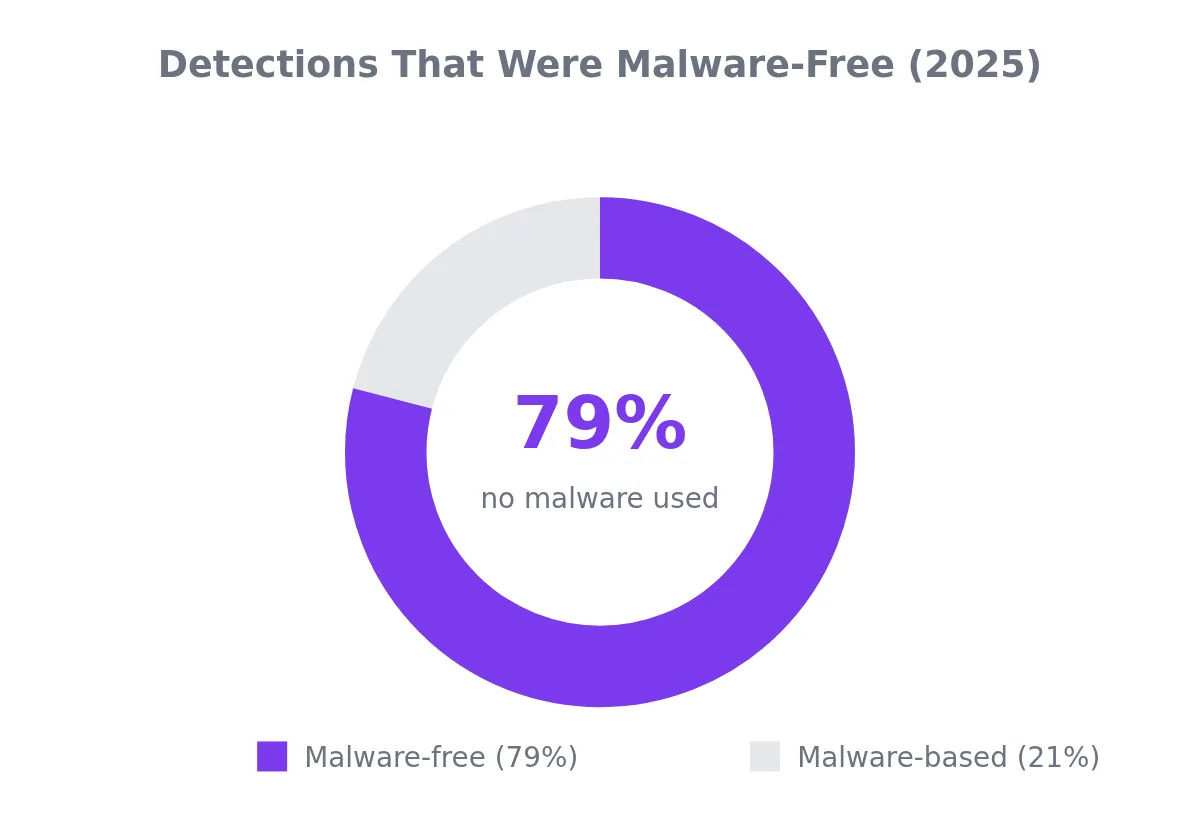
- The threat is real: 450,000+ new malware samples daily (AV-TEST, 2025). But 79% of detected attacks now use no malware at all (CrowdStrike, 2025).
- Everyone needs baseline protection; businesses increasingly need EDR — antivirus that watches behavior, not just files.
Related: what is cybersecurity
What Is Antivirus Software? (Short Answer)
Antivirus software is a program that detects, blocks, and removes malicious software — viruses, ransomware, spyware, and trojans — before it can damage your device or steal your data. It's the enforcement layer of a market that reached $4.79 billion for consumer products in 2025, per SQ Magazine's antivirus statistics roundup.
That one-liner covers the "what." The useful understanding is the "how" — because what we still call "antivirus" in 2026 bears little resemblance to the virus scanners of the 2000s. Modern protection is a stack:
- Prevention — blocking known malicious files, links, and downloads before they run
- Detection — spotting suspicious behavior from programs that slipped through
- Response — quarantining threats, rolling back damage, alerting you (or your security team)
One important reframe: the industry now calls this category endpoint protection, because phones, tablets, and servers need it as much as PCs. When you see "endpoint security," read "antivirus, grown up."
How Does Antivirus Software Work?
Modern antivirus runs three detection methods at once — and the shift away from pure signature-matching is why detection rates in independent tests now exceed 99%, with AI-assisted engines reaching about 98% accuracy on novel threats, per SQ Magazine's 2025 data. Here's each layer, in plain terms:

1. Signature-Based Detection (the fingerprint check)
Every known malware sample has a unique digital fingerprint. Your antivirus compares files against a database of these fingerprints — all 1.56 billion of them, effectively. Fast and near-perfect against known threats. Useless against brand-new ones. That's why...
2. Heuristic and Behavioral Analysis (the suspicion engine)
Instead of asking "have I seen this file before?", behavioral detection asks "is this program acting like malware?" Encrypting hundreds of files in seconds? Injecting into other processes? Contacting a known criminal server? Flagged and stopped — even if the file has never been seen before. This is how zero-day threats get caught.
3. Cloud and AI-Assisted Detection (the hive mind)
When any protected machine worldwide encounters a new threat, the vendor's cloud analyzes it and pushes protection to everyone else within minutes. Add machine learning models trained on billions of samples, and you get the numbers behind the modern stack: 37% of antivirus products now integrate AI/ML detection, per SQ Magazine.
Why does the layering matter? Because each method covers the others' blind spot. Signatures catch the 99% of recycled malware instantly and cheaply. Behavior analysis catches the new stuff. The cloud closes the gap between "first victim" and "everyone protected."
What Are the Types of Antivirus Software?
"Types" gets used two ways — by detection method and by product category — so here's both, honestly labeled. The category shift is the story: about 70% of enterprises now combine traditional antivirus with EDR, sandboxing, or firewall modules rather than running a standalone scanner, per SQ Magazine's 2025 enterprise data.
| Type | What it means | Best for |
|---|---|---|
| Signature-based AV | Classic fingerprint matching against known malware | Baseline protection, older systems |
| Heuristic/behavioral AV | Flags suspicious program behavior | Zero-day and modified threats |
| Cloud-based AV | Lightweight client, analysis in vendor cloud | Low-spec devices, fast updates |
| Next-gen antivirus (NGAV) | AI/ML models predicting malicious intent | Modern consumer + business suites |
| EDR (Endpoint Detection & Response) | Continuous recording + investigation tools | Businesses with IT/security staff |
| XDR (Extended Detection & Response) | EDR extended across email, cloud, network | Larger organizations, SOC teams |
| Internet security suites | AV bundled with VPN, firewall, password manager | Consumers wanting one subscription |
| Mobile antivirus | App scanning + anti-phishing for Android/iOS | Phones and tablets |
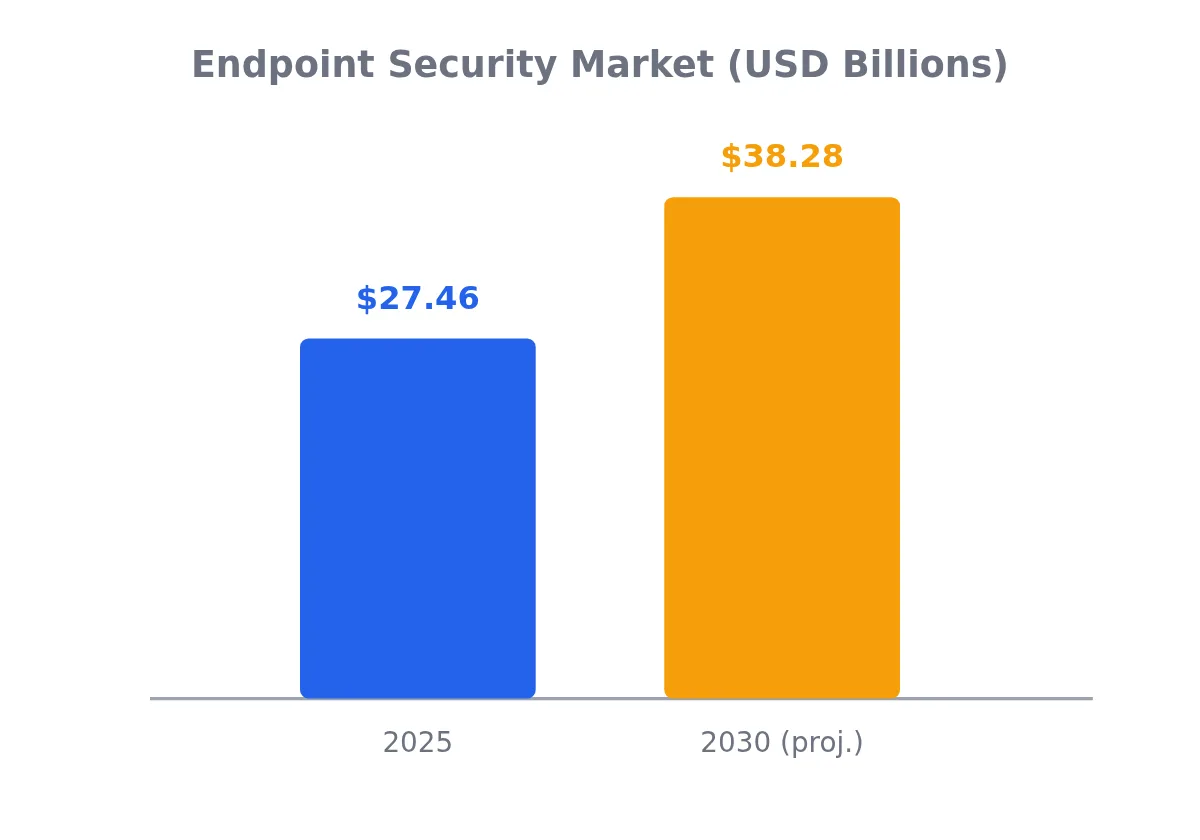
The consumer-versus-business line is the one that matters. Consumer products decide for you, silently. Business-grade EDR assumes a human will investigate — it records everything and answers the question "what did the attacker touch?" That distinction drives the endpoint security market's growth from $27.46 billion in 2025 toward a projected $38.28 billion by 2030, per market data compiled by SQ Magazine.
What Are Some Examples of Antivirus Software?
The market splits into three tiers. These are representative, widely-tested examples — not a ranking, and we've no affiliation with any of them:
- Built-in: Microsoft Defender (Windows), XProtect (macOS) — free, always on, and dramatically better than their old reputations. Defender routinely scores at or near the top in AV-TEST and AV-Comparatives independent testing.
- Consumer suites: Bitdefender, Norton, McAfee, ESET, Avast/AVG, Kaspersky — paid products layering on VPNs, identity monitoring, and multi-device coverage. Notably, 61% of consumers ran free antivirus in 2025, up from 52% the year before, per Security.org's annual consumer report — the built-ins raised the bar for everyone.
- Business EDR/XDR: CrowdStrike Falcon, SentinelOne, Microsoft Defender for Endpoint, Sophos Intercept X — behavior-recording platforms designed for IT teams and incident responders.
How should you read independent test results? AV-Comparatives' September 2025 Malware Protection Test put leading products above 99% protection rates — which tells you two things. First: any reputable, updated product blocks the overwhelming majority of commodity malware. Second: the differences that matter now are false alarms, performance drag, and what happens after something gets through.
Here's the pattern worth internalizing: antivirus products stopped competing on "does it catch viruses" years ago — they all do. The real differentiators in 2026 are response features and resource usage. Choosing antivirus by detection rate alone is like choosing a car by whether it has brakes.
Why Is Antivirus Software Still Important?
Because the malware volume never stopped climbing — and because antivirus is the one control that works with zero effort from you. The five reasons that hold up in 2026:
- The volume is unmanageable manually. 450,000+ new samples daily means no amount of "careful clicking" substitutes for automated scanning.
- Ransomware stakes keep rising. Ransomware appeared in 44% of confirmed breaches in 2025, per Verizon's Data Breach Investigations Report — and recovery costs dwarf any subscription.
- It catches your bad day. Everyone eventually clicks the wrong link at 11 PM. Antivirus exists for that moment, not for your alert mornings.
- Phishing defense is bundled now. Modern suites block malicious sites and attachments — the delivery mechanism for most attacks — not just executable files.
- It's the cheapest layer. Free-to-modest cost, near-zero maintenance, always on. No other security control has that ratio.
Related: credit card security guide
Do You Still Need Antivirus in 2026? An Honest Answer
Yes — but "antivirus alone" stopped being a security strategy. The uncomfortable stat: in 2025, 79% of detections were malware-free attacks, per CrowdStrike's Global Threat Report — attackers logging in with stolen passwords, abusing legitimate admin tools, and phishing their way past every file scanner. There's no malicious file to detect when the attacker is a valid user.
So the honest guidance splits by who you are:
- Home users: keep Microsoft Defender (or your Mac's built-in protection) enabled and updated — it's genuinely good now. Pay for a suite if you want the extras: VPN, identity monitoring, family device coverage. Then spend your remaining attention on the things antivirus can't do: strong unique passwords and MFA.
For the network layer antivirus cannot see, read what network security is and how it works.
- Businesses: built-in antivirus isn't enough, because the attacks that hurt — credential abuse, living-off-the-land techniques — don't trip file scanners. You need EDR watching behavior, and ideally someone (in-house or managed) reviewing what it finds. That's the 70%-of-enterprises trend, and it exists for a reason.
From our incident-response work: we've never been called into a breach because antivirus was missing — Defender was running in almost every case. The breaches happened around it: a phished password, an exposed remote-desktop port, an unmonitored alert. Antivirus held its lane. Nobody was watching the other lanes.
Not sure whether your business needs EDR, better monitoring, or just better hygiene? Arica Tech reviews your current endpoint protection and shows you where the gaps are. Talk to our team →
Frequently Asked Questions
What is antivirus software in short answer?
Antivirus software is a program that detects, blocks, and removes malicious software — viruses, ransomware, spyware, and trojans — from computers and devices. It works continuously in the background, scanning files and behavior against a database of 1.56 billion+ known threats (AV-TEST, 2025) plus AI-based analysis.
How does antivirus software work?
Three layers run simultaneously: signature detection matches files against known-malware fingerprints; behavioral analysis flags programs acting maliciously (like mass-encrypting files); and cloud intelligence shares new threats across all users within minutes. Combined, leading products exceeded 99% protection rates in AV-Comparatives' 2025 testing.
What are 5 examples of antivirus software?
Microsoft Defender (built into Windows), Bitdefender, Norton, ESET, and Avast are five widely used examples. For businesses, EDR platforms like CrowdStrike Falcon and SentinelOne represent the current generation. In 2025, 61% of consumers used free antivirus — mostly built-in options — per Security.org.
Is free antivirus good enough?
For most home users, yes. Microsoft Defender scores at or near the top of independent tests, and 61% of consumers ran free protection in 2025 (Security.org). Paid suites add VPNs, identity monitoring, and multi-device management rather than fundamentally better detection. Businesses need EDR regardless.
What is the difference between antivirus and EDR?
Antivirus blocks known and suspicious malicious files automatically. EDR (Endpoint Detection and Response) continuously records device activity so security teams can detect, investigate, and respond to attacks — including the 79% of 2025 detections that involved no malware at all (CrowdStrike). EDR assumes a human investigates; antivirus doesn't.
The Bottom Line
Antivirus software isn't obsolete — it's table stakes. The category quietly evolved from "virus scanner" to layered endpoint protection, and the built-in options got good enough that the real question moved: not "which antivirus?" but "what's watching everything antivirus can't see?"
The practical version:
- Keep antivirus on and updated — built-in is fine for most home users.
- Judge products on false alarms, performance, and response features; they all catch commodity malware now.
- Businesses: EDR plus someone watching it beats any standalone scanner.
- Remember the 79%: most modern attacks use stolen credentials, not malware. Pair your antivirus with MFA and strong passwords, or you've locked one door of two.
Antivirus catches your bad day. The rest of your security determines whether that bad day matters.
Related: what is cybersecurity
Sources
- StationX, 65+ Malware Statistics for 2026 (AV-TEST database figures), retrieved 2026-08-20, https://www.stationx.net/malware-statistics/
- SQ Magazine, Antivirus Statistics 2026: Growth, Detection & Adoption, retrieved 2026-08-20, https://sqmagazine.co.uk/antivirus-statistics/
- Security.org, 2025 Antivirus Trends, Statistics, and Market Report, retrieved 2026-08-20, https://www.security.org/antivirus/antivirus-consumer-report-annual/
- AV-Comparatives, Malware Protection Test September 2025, retrieved 2026-08-20, https://av-comparatives.org/tests/malware-protection-test-september-2025/
- CrowdStrike, 2025 Global Threat Report, retrieved 2026-08-20, https://www.crowdstrike.com/global-threat-report/
- Verizon, 2025 Data Breach Investigations Report, retrieved 2026-08-20, https://www.verizon.com/business/resources/reports/dbir/
Need this in your own environment?
Arica Tech Security runs VAPT, ISO 27001 readiness support, and digital forensics engagements for teams in India and beyond.